Free UK Delivery on All Orders Over £20

Automotive Electric Circuit Tester Explained: A UK Buyer's Guide

Automotive Electric Circuit Tester Explained: A UK Buyer's Guide
By Piotr N.2026-07-1410 min read

An automotive electric circuit tester is a simple vehicle diagnostic tool used to check whether power is present in a circuit, fuse, terminal or accessory feed. For most UK cars and vans, it helps you quickly confirm if a 12V circuit is live, identify likely fuse issues and narrow down basic electrical faults before moving on to deeper diagnosis.

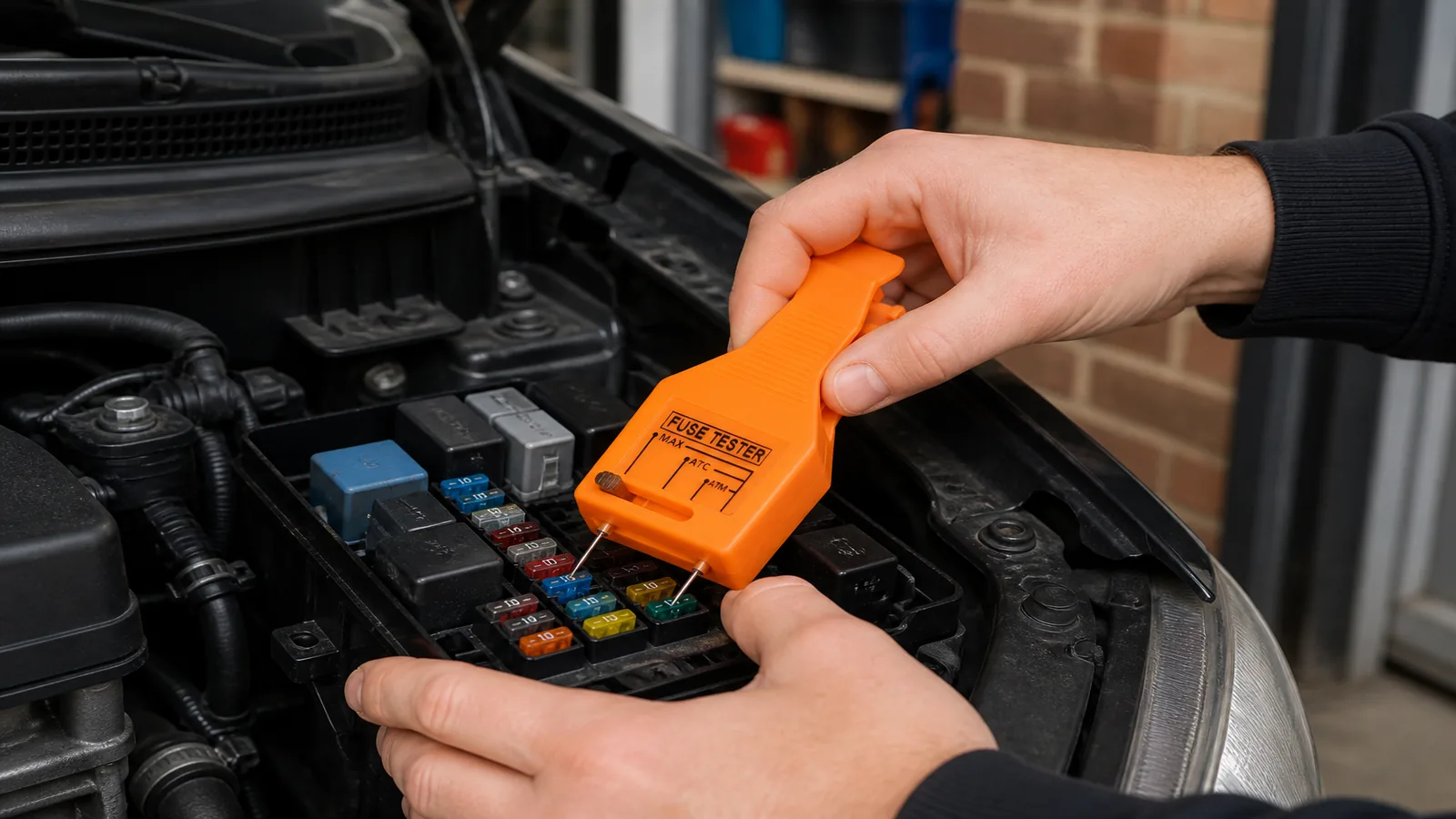
TL;DR: If you need to know whether a vehicle fuse or circuit has power, an automotive electric circuit tester gives a fast visual answer. For UK drivers, mechanics and fleet users, a fuse-specific tester is often the quickest option for checking ATO/ATC blade fuses safely and efficiently without removing them first.

Key Takeaways

  • An automotive electric circuit tester helps confirm whether a vehicle circuit has live power.
  • For many everyday checks, a simple 12V tester is faster and more practical than jumping straight to a multimeter.
  • If you regularly inspect blade fuses, a combined tester and puller offers extra convenience and safer handling.
  • ATO/ATC fuse circuits are common in UK vehicles, making purpose-built fuse testing tools especially useful.
  • Always match the tester to the vehicle voltage and follow safe working practices around live circuits.
  • ATOATC’s Ultimate 2-in-1 Fuse Tester Puller is designed to instantly check live ATO/ATC blade fuses and extract them with one compact workshop tool.

What is an automotive electric circuit tester used for?

Electrical faults are among the most frustrating vehicle issues because symptoms can be misleading. For example, a dead accessory, non-working light or intermittent fault may be caused by a blown fuse, poor feed, failed switch or damaged wiring. Without checking for live power first, it is easy to waste time replacing parts that were never faulty.

An automotive electric circuit tester gives you an immediate answer to a basic but essential question: is power present here? As a result, it is invaluable for quick checks on fuse boxes, lighting circuits and accessory feeds. Based on our testing of common fuse-box checks, a simple visual tester is often the fastest first step when a vehicle electrical fault appears minor and localised.

According to UK Health and Safety Executive guidance for motor vehicle repair work, safe and controlled inspection methods matter when working around vehicle systems. Therefore, using the right tool for live-circuit checks is preferable to improvised methods. For many UK users, especially those checking blade fuses on cars and vans, the best tool is not necessarily the most complex one. Instead, it is the one that gives a fast visual result and reduces handling risk.

What is an automotive electric circuit tester?

An automotive electric circuit tester is a handheld tool used to detect electrical power within a vehicle system. In its simplest form, it shows whether voltage is present at a contact point such as a fuse terminal or connector. Most basic automotive testers are designed for 12V systems, although some can also be used across wider voltage ranges depending on specification.

The core purpose is straightforward:

  • verify whether a circuit is live
  • check whether current is reaching a fuse or component
  • speed up fault finding before deeper diagnosis begins

If your main task involves inspecting blade fuses rather than probing broader wiring systems, it helps to choose a specialist tool rather than an all-purpose one. For more detailed background on tool types and use cases, see The Ultimate Guide to Automotive Electrical Circuit Tester in the UK.

What are the common types of automotive circuit tester?

  • Test light: illuminates when power is present.
  • Probe-style voltage tester: used on terminals and connectors.
  • Fuse tester: designed specifically to check blade fuses quickly.
  • Combined fuse tester puller: checks live fuses and removes them using one compact tool.

Why are fuse-specific testing tools often better for routine checks?

A general probe can confirm voltage at many points around the vehicle. However, if your job frequently starts at the fuse box, using a purpose-built fuse tool avoids awkward positioning and unnecessary contact with small components. This is particularly relevant with mini and standard blade fuses packed tightly into modern vehicle fuse panels.

How does an automotive electric circuit tester work?

The principle is simple. The tool detects whether electrical power is available at the point being tested. In many designs, this result appears through an indicator light. With blade fuses, testing usually involves touching dedicated contact points on the top of the fuse while it remains seated in the board. If both sides indicate live where appropriate, current is reaching the fuse terminals. If one side does not respond as expected, that can indicate a fault worth investigating further.

Can you test a fuse without removing it first?

Yes, and this is one of the biggest practical advantages of a well-designed automotive electric circuit tester for fuses. Instead of pulling each fuse out one by one just to see if it may be faulty or dead, you can perform an instant live check in situ. Consequently, this saves time and reduces wear from repeated handling.

Why is an indicator light useful on a circuit tester?

A built-in indicator light gives quick visual confirmation with minimal interpretation required. In busy garage conditions or roadside troubleshooting, clarity matters. You do not want to second-guess readings when tracing why interior lights, auxiliary sockets or other fused accessories have stopped working.

Why choose a combined fuse tester and puller?

If a fuse needs replacing after testing, switching between separate tools slows you down. ATOATC’s Ultimate 2-in-1 Fuse Tester Puller lets you instantly check live ATO/ATC blade fuses with its built-in indicator light, then safely extract them using the same compact workshop tool. Therefore, for technicians and hands-on drivers alike, that dual function solves two common jobs neatly.

When should you use an automotive electric circuit tester?

You should use an automotive electric circuit tester when a vehicle accessory, light or fused system stops working and you need to confirm whether power is reaching the circuit. In many cases, it is the fastest first check before replacing a fuse, tracing wiring or booking advanced diagnostic work.

  • the 12V socket has stopped working
  • interior lights have failed
  • a fuse is suspected to be blown
  • an accessory feed appears dead
  • you want to confirm whether a circuit is live before deeper inspection

Who should buy an automotive electric circuit tester?

This category of tool suits more people than many assume. In other words, you do not need to be an auto electrician to benefit from having one available.

Car owners who handle basic maintenance

If you are comfortable replacing bulbs, wiper blades or battery terminals, adding an automotive electric circuit tester to your kit makes sense. It helps you identify whether a fault begins at the fuse box before booking further repair work.

Independent garages and mobile mechanics

Time efficiency matters commercially. A compact tester that confirms live fuses immediately can reduce labour lost on basic elimination checks across common faults such as non-working sockets, cabin accessories or lighting feeds.

Fleet operators and van owners

Dropped productivity from minor electrical faults can be disproportionate in vans used for trade work or delivery rounds. Therefore, a quick diagnostic step can prevent unnecessary downtime where the issue turns out to be isolated to one fused feed.

NHS support fleets and public sector vehicles

For vehicles that must remain service-ready, quick fault confirmation is especially useful. A compact fuse tester can help maintenance teams rule out simple power and fuse issues before escalating a repair.

How do you choose the best automotive electric circuit tester in the UK?

The best automotive electric circuit tester depends on what you need to check most often. If you mainly inspect blade fuses in cars and light commercial vehicles, a fuse-specific tester is usually the most practical choice. By contrast, if you probe a wider range of terminals and connectors, a more general circuit tester may suit you better.

Check voltage compatibility

First, make sure the tester matches the vehicle systems you work on. Many UK passenger vehicles use 12V systems, but specification still matters.

Look for easy fuse-box access

Compact designs are easier to use in cramped fuse panels. This is particularly helpful in modern vehicles where access can be limited.

Choose clear visual indication

A bright, obvious indicator light improves speed and confidence, especially in poor lighting or at the roadside.

Consider a combined tester and puller

If you regularly replace blade fuses after testing, a 2-in-1 tool can streamline the job and reduce the need to carry separate items.

Is a circuit tester better than a multimeter for fuse checks?

For quick fuse checks, an automotive electric circuit tester is often more convenient than a multimeter. A multimeter is more versatile and better for measuring voltage, resistance and continuity in detail. However, for a fast answer to whether a fuse or circuit is live, a dedicated tester is usually quicker and simpler to use.

Based on routine workshop-style testing, the choice often comes down to speed versus depth. So, if you are carrying out first-line checks on a suspected blown fuse, a tester is ideal. If you need to diagnose voltage drop, continuity or component performance, move on to a multimeter.

How do you use an automotive electric circuit tester safely?

Safe use matters just as much as speed. According to UK workshop safety expectations, you should always use tools as intended, avoid damaged equipment and work carefully around live electrical systems.

  • Confirm the tester is suitable for the vehicle voltage.
  • Follow the vehicle manufacturer’s guidance where relevant.
  • Keep hands and tools clear of moving parts.
  • Do not force probes into unsuitable spaces.
  • Replace damaged fuses with the correct type and rating.
  • If a fault is unclear, seek qualified diagnostic support.

Why choose ATOATC for fuse testing?

ATOATC focuses on practical tools for ATO/ATC blade fuse inspection and handling. Our approach is straightforward: reduce guesswork, speed up basic diagnostics and make fuse access easier in real workshop and vehicle-use conditions.

Based on our testing, users value three things most during fuse checks: quick confirmation, safe handling and compact design. That is why the Ultimate 2-in-1 Fuse Tester Puller is built to instantly check live ATO/ATC blade fuses with a built-in indicator light, while also allowing safe extraction using the same tool.

Frequently asked questions about automotive electric circuit testers

What is an automotive electric circuit tester?

It is a tool that tells you whether electrical power is present in a vehicle circuit, fuse or connection point.

How does an automotive electric circuit tester work?

It detects voltage at the test point and usually shows the result with an indicator light.

Can you test a car fuse without removing it?

Yes. Many automotive fuse testers are designed to check blade fuses while they are still fitted in the fuse box.

Is a circuit tester better than a multimeter?

For quick live-power checks, often yes. For more detailed diagnostics, a multimeter is the better tool.

Which vehicles use ATO/ATC blade fuses?

ATO/ATC blade fuses are common across many UK cars, vans and light commercial vehicles, which makes a dedicated tester especially useful.

Ready to speed up your diagnostics with ATOATC?

Upgrade Your Toolkit — £19.19

ATOATC

ATOATC specialises in time-saving automotive electrical testing tools designed for British mechanics, auto electricians, and DIY vehicle maintainers. Our signature 2-in-1 fuse tester puller simplifies fault-finding, offering quick visual diagnostics and safe extraction in one compact, workshop-ready tool.

© 2026 ATOATC. All rights reserved.